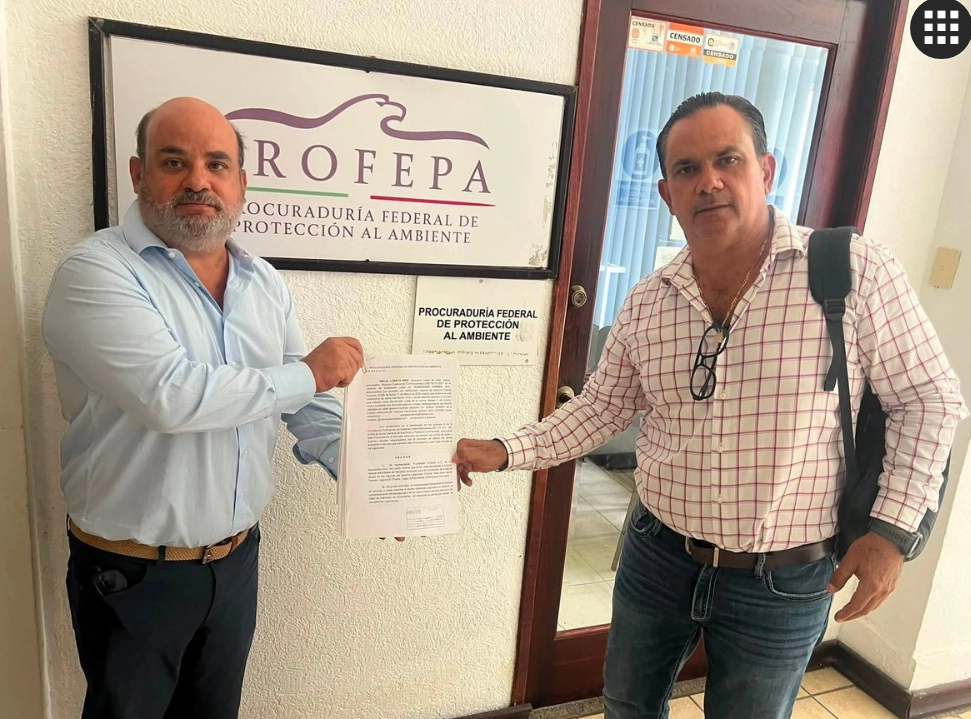

The Chairel Foundation A.C. filed a complaint with Profepa over possible damage to the Tamesí River lagoon system caused by the handling and dumping of construction debris resulting from repair work on the Chairel I, II, and III bridges along the Western Bypass.
The organization filed the federal complaint against whoever may be responsible for possible environmental crimes and requested an investigation into the alleged damage that, according to the foundation, may have occurred during work on infrastructure managed by Federal Roads and Bridges and Related Services (Capufe).
Emilio Lobato, president of Fundación Chairel A.C., confirmed that the complaint had been filed and said the organization approached federal authorities after documenting the conditions observed in the area.
“Fundación Chairel A.C., faithful to its commitment to care for and monitor our lagoon system, today, August 11, 2026, filed the corresponding complaint against whoever may be responsible for the damage caused to our lagoon during repair work on the Chairel I, Chairel II, and Chairel III bridges along the Bypass,” reported Emilio Lobato Briz.
The foundation is asking Profepa to determine who carried out the reported activities, what materials were deposited or handled, where they ended up, and whether they caused any damage to the ecosystem.
The organization maintains that the issue is particularly important because it conducts aquaculture studies in the Chairel system aimed at increasing and preserving fish populations.
Among the bodies of water it monitors are the Tamesí, El Charro, Vega La Escondida, and Champayán lagoons. According to the document submitted to Profepa, members of the organization travel daily across the bodies of water in boats to observe the condition of the system and conduct technical studies on aquatic species.
The foundation says this monitoring allows it to detect changes in the condition of the lagoons.
The complaint also includes support from residents of nearby neighborhoods, recreational fishermen, and citizens who have documented the work and its possible effects on the surrounding environment.
“We hope for a prompt response and action from our authorities,” Lobato stated.
The foundation asked federal authorities to determine whether environmental liability exists and, if so, to proceed in accordance with the law.
Source: jornada