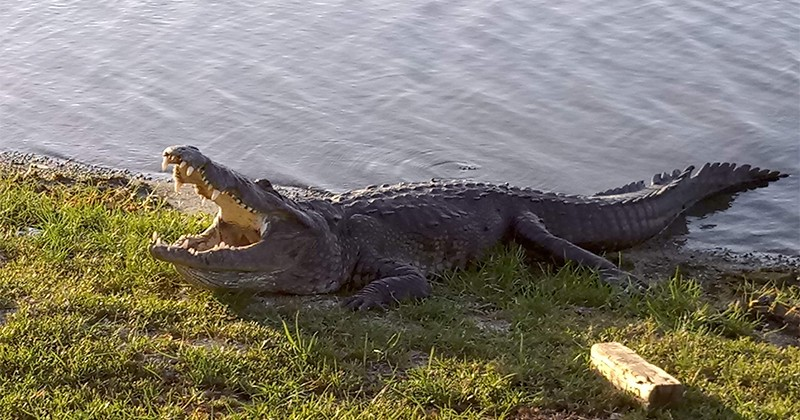

They denounce the alleged sale of crocodile meat in the municipality of Altamira, passing it off as “catán.”
Residents of the Tamesí ejidos (common lands) claim that some fishermen have specialized in capturing crocodiles.
“We know that fishermen are dedicated to capturing these animals, selling the meat and their skin. They say it has several properties,” said Mr. Antonio Hernández, a resident of the left bank of the Tamesí.
During inspections carried out by health authorities in established seafood businesses, they have found no evidence of crocodile meat.
Since the weekend, a video has circulated showing a skinned crocodile, as well as a tray with pieces of the animal’s meat.
With the flooding of the Champayán Lagoon and the Tamesí River, the presence of crocodiles also increased, which fishermen took advantage of.
Altamira’s Director of Ecology and Environment, Rubén Herver Zarate, commented that for now, the UMA project does not include the use of crocodiles.
“It would be a phase solely for rescue and temporary protection; a UMA for use management is not yet part of the plan.”
Authorities from the south and state have held initial meetings to define the next steps, as involuntary interaction between humans and crocodiles must be taken into account, given the climatic conditions in the area.
The goal is to replicate the SOS crocodile program or at least comply with the protocols established in that program.

Source: expreso.press