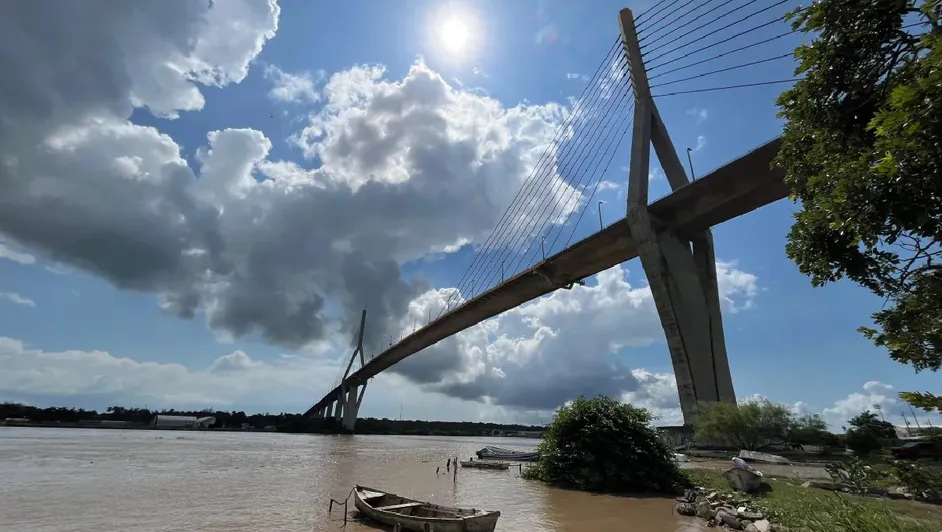

The Tamaulipas government has advanced its efforts with the National Water Commission (Conagua) regarding the project aimed at bringing water from the Pánuco River to the Vicente Guerrero Dam, in the center of the state, and from there to the border, while Nuevo León has resumed studies to measure potential impacts in the event of a possible water transfer to the Cerro Prieto-Monterrey pumping station.
On August 13, authorities from Monterrey’s Water and Drainage Department submitted an Environmental Impact Statement (MIA) to the Secretariat of Environment and Natural Resources (Semarnat) to evaluate the feasibility of a project that could extract water from the Pánuco River and transport it to the city of Nuevo León.
However, the Secretariat of Hydraulic Resources of Tamaulipas stated that the state has made greater progress on its own aqueduct project to supply water to its territory.
“We are undoubtedly moving forward; in other words, we are further ahead because the federal government has already allocated resources since last year so that the National Water Commission (Conagua) can carry out the technical pre-investment study for our project,” said Raúl Quiroga Álvarez, Secretary of Hydraulic Resources of Tamaulipas.
The secretary explained that the objective “is to bring water from the Pánuco to the Vicente Guerrero Dam (located in Padilla, in central Tamaulipas) from a site called Reventadero and be able to transport water to the northern part of the state, because our immediate concern is to satisfy the water needs we have along the border.”
Tamaulipas Aqueduct Seeks to Supply Water to the Border
Regarding the possibility of the project being carried out, officials say the chances are high, although there are no exact dates, since efforts have focused on securing resources for studies that are already being reviewed by the investment unit of the federal government’s treasury authorities, following instructions from Governor Américo Villarreal.
“Yes, there are possibilities, but we are fully focused on this. We have been requesting support from the federal government, we have carried out our own efforts, and at this moment the National Water Commission has been allocated just over $52 million by the Treasury Secretariat to advance the pre-investment study,” Quiroga Álvarez emphasized.
How Much Water Does Tamaulipas Plan to Extract from the Pánuco River?
Regarding the amount of water Tamaulipas seeks to extract from the Pánuco River with federal government support, he indicated that the estimated figures have changed according to meetings held with Conagua authorities and the governor.
“We developed the project for 20 cubic meters per second; however, during the governor’s most recent meeting with federal authorities, the possibility of reducing it to 10 cubic meters per second was considered, so we are currently conducting the study to update that figure,” Quiroga Álvarez explained.
Pánuco River Water Transfer to Monterrey Raises Environmental Concerns
Local specialists regarding Monterrey’s project to divert water from the Pánuco River say that the corresponding studies must be carried out, as they believe environmental problems could arise.
Oceanologist Marcelo René García explained that “taking water from the Pánuco could cause damage to the ecosystem in southern Tamaulipas, particularly through a reduction in certain fish species.”
It could also lead to an increase in sediment in the lower part of the waterway due to reduced water flow, the expert said, as a consequence of this type of project.
The expert also pointed out that the river located between Tamaulipas and Veracruz is one of the most polluted rivers in the country. Therefore, a project to divert its water would be extremely costly, since water treatment plants would have to be taken into consideration.
Source: milenio